Tinnitus Treatment · All Articles · Hearing Loss
Why Sound Engineering Research Holds the Key to Treating Tinnitus
Written by Lindsay Fletcher (nee Stride), Company Director and Principal Consultant
· 4 min read

Table of Contents
- Why Sound Engineering and Audiology Don't Usually Meet
- What Research Into Sound Actually Tells Us About Treating Tinnitus
- Two Theories, One Feedback Loop
- From Research to Treatment: Targeting Rather Than Masking
- Why This Research Matters for You
- Ready to Find Out What's Really Behind Your Tinnitus?
Most tinnitus advice comes from an audiology background alone, and understandably so. But tinnitus isn't just a hearing problem. At its core, it's a sound problem, an internal one, generated somewhere in the ear or the brain. And understanding sound itself, how it's produced, mixed, filtered and manipulated, has turned out to be just as important as understanding hearing when it comes to treating it effectively.
That's the thinking behind our approach at Regain Hearing. Research into sound engineering, not just audiology, is what allows us to target tinnitus rather than simply mask it.
Why Sound Engineering and Audiology Don't Usually Meet
Audiology and sound engineering are typically treated as entirely separate disciplines. Audiologists are trained to measure hearing and diagnose hearing loss. Sound engineers are trained to understand acoustics, frequency, microphones, amplifiers and how sound behaves and can be shaped.
There's no formal training that combines the two specifically for treating tinnitus and research, which is part of the reason most tinnitus advice stops at coping strategies rather than active treatment. Bringing a sound engineering background into an audiology setting means asking different questions: not just "can you hear this?" but "what exactly is this sound, and how can it be manipulated to change what you're experiencing?"
What Research Into Sound Actually Tells Us About Treating Tinnitus
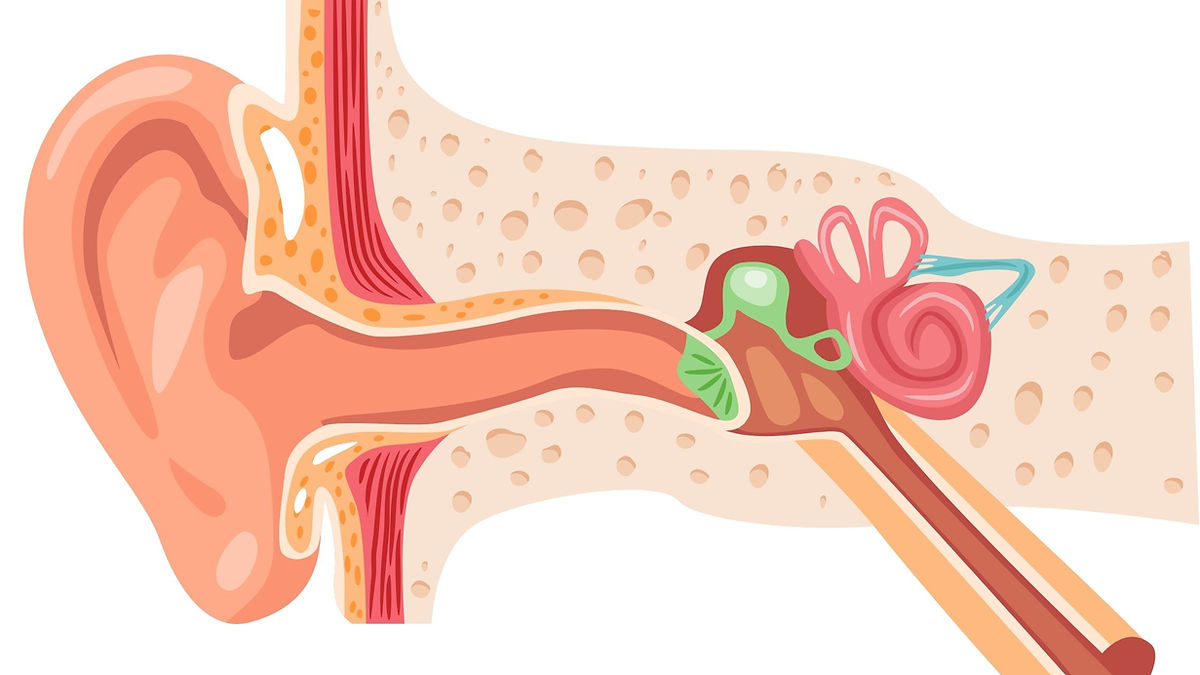
Understanding tinnitus starts with understanding where sound in the ear can originate, and this is where research into acoustics becomes essential.
- The eardrum – acting like a diaphragm or microphone membrane, its tension and movement can be measured using tympanometry, much like testing the response of an audio component
- The middle ear – the three smallest bones in the body (the ossicles) transmit vibration, and irregularities here can generate their own unwanted sound
- The inner ear (cochlea) – home to around 20,000 hair cells that convert vibration into electrical signals; when these are disturbed, particularly at the entrance to the cochlea, they can begin firing on their own
Standard hearing tests measure from 125Hz to 8,000Hz, but research shows most tinnitus activity actually sits between 8,000Hz and 12,000Hz. Without extended-range testing into this higher frequency band, an entire region where tinnitus most commonly originates can be missed altogether.
Two Theories, One Feedback Loop
Sound engineering research has helped shape two complementary theories of how tinnitus behaves:
1. The Hair Cell Theory
Damaged or disturbed high-frequency hair cells can begin moving on their own, sending unwanted signals along the auditory nerve. Around one in five people experience tinnitus linked to this kind of hearing loss related activity.
2. The Brain Feedback Loop Theory
The auditory nerve works in both directions. When the brain detects a missing or disrupted signal, it can generate its own sound to "fill the gap," similar to phantom limb sensations. That signal travels back down the auditory nerve, restimulating the hair cells, and the cycle repeats.
Understanding this as a feedback loop, in the same way a microphone placed too close to a speaker produces feedback, is a direct result of applying sound engineering principles to what's happening inside the ear. It reframes tinnitus not as a single fault, but as a loop that can potentially be disrupted.
From Research to Treatment: Targeting Rather Than Masking
Most conventional tinnitus support relies on masking: white noise, ocean sounds, or ambient apps designed to distract from the ringing rather than address it. That can help some people, but it doesn't treat the underlying feedback loop.
Applying sound engineering research changes the approach:
- Precise identification – using diagnostic testing to establish which frequency range and which part of the ear is generating the sound
- Bespoke sound design – rather than a generic white noise track, a specific sound is engineered to match the individual's tinnitus
- Targeted delivery – the sound is played for short, structured sessions, often twice a day, aiming to disrupt the feedback loop rather than simply cover the noise
- Hearing aid technology – much of this approach draws on techniques originally developed for hearing aid manufacturing, repurposed specifically to treat tinnitus rather than only amplify sound
This is a meaningfully different process from simply handing someone a relaxation app, and it's only possible because it draws on genuine research into how sound itself behaves, not just how hearing works.
Why This Research Matters for You
Tinnitus can't currently be cured, but treating it properly requires treating it as what it is: an unwanted sound. That means the tools used to understand and shape sound, developed through years of sound engineering research, have just as much relevance as traditional audiology when it comes to reducing it.
At Regain Hearing, this combined approach has helped hundreds of people reduce the impact of their tinnitus, including many with no measurable hearing loss at all. We go further into detail on how we use modern audio technology in our treatments on our Youtube.
Ready to Find Out What's Really Behind Your Tinnitus?
If you're tired of masking your tinnitus and want an approach based on genuinely understanding the sound itself, book a consultation with Regain Hearing and let's find out what's really going on.